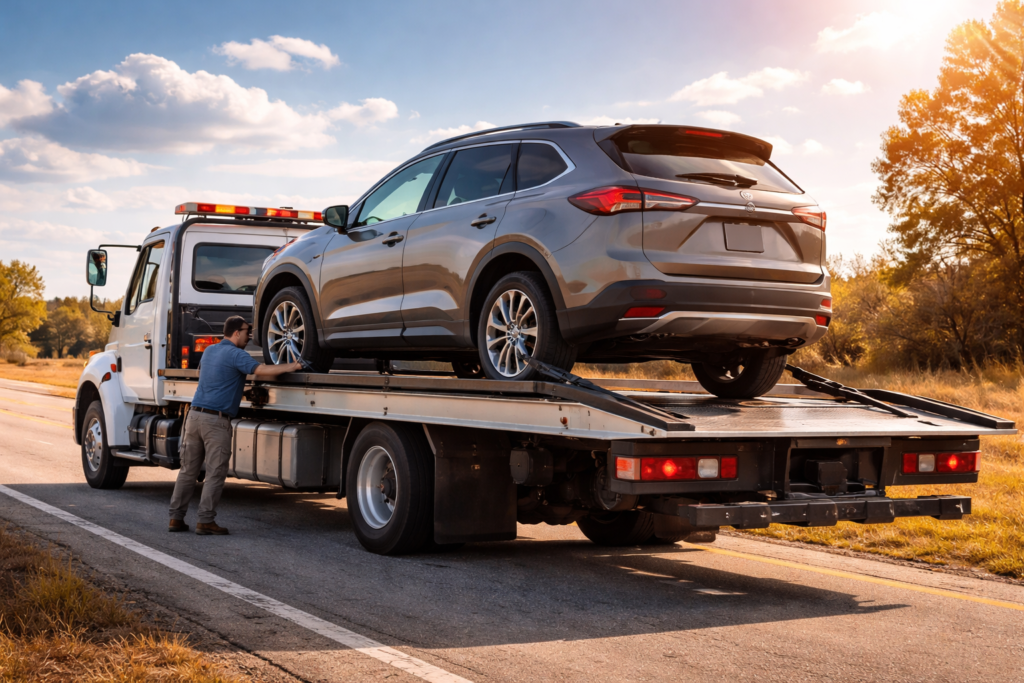
All wheel drive vehicles are built differently, and that difference matters when it comes to towing. The way power is sent to all four wheels gives AWD vehicles better traction and control, but it also makes the drivetrain more sensitive during transport.
Many Texas drivers are surprised to learn that using the wrong towing method can lead to expensive damage, even over a short distance. That raises an important question. Is flatbed towing better for AWD vehicles in Texas?
In most situations, the answer is yes. Flatbed towing is generally the safest option because it lifts the entire vehicle off the ground, keeping all four wheels stationary and protecting the drivetrain from unnecessary strain.
Below, you will find a clear explanation of why AWD vehicles require special towing considerations, how flatbed towing works, and when it is the right choice for drivers across Texas.
You can also explore different towing types in Odessa, TX to better understand when flatbed towing is recommended over other methods.
What Makes AWD Vehicles Different From 2WD Vehicles?
The main difference between all wheel drive and two wheel drive vehicles comes down to how power is delivered to the wheels. In an AWD vehicle, power is distributed to all four wheels through a connected system that includes differentials, driveshafts, and a transfer case. These components are constantly working together while the vehicle is running.
Because all four wheels are linked through the drivetrain, movement in one part of the system affects the rest. When an AWD vehicle is towed with only two wheels lifted, the wheels that remain on the ground can continue turning. That rotation can force internal components to move even though the engine is off and the system is not properly lubricated.
This is where problems begin. Without the engine running, transmission fluid and lubricants are not circulating as they normally would. That lack of lubrication, combined with forced rotation, can lead to overheating and premature wear inside the drivetrain.
Two wheel drive vehicles are built differently. Power is sent to either the front or rear wheels, not all four. Because fewer components are connected, many 2WD vehicles can be safely towed with two wheels off the ground. AWD systems, however, are more interconnected and require additional protection during transport.
Is Flatbed Towing Better for AWD Vehicles in Texas?
In most situations, yes. Flatbed towing is generally the safest and most reliable option for AWD vehicles in Texas because it removes stress from the drivetrain during transport.
Unlike wheel lift towing, flatbed towing places the entire vehicle onto the truck bed. This means nothing is left rolling on the road, which is critical for all wheel drive systems that connect all four wheels through the drivetrain.
With flatbed towing:
- The entire vehicle is lifted and secured on the truck bed
- All four wheels remain completely off the ground
- No drivetrain components are forced to rotate while the engine is off
- The risk of differential, transfer case, or transmission damage is significantly reduced
Because Texas often involves long distances, high-speed highways, and extreme temperatures, eliminating unnecessary drivetrain movement is especially important. Even short tows can create internal strain if the wrong method is used.
For this reason, most vehicle manufacturers recommend flatbed towing for AWD models. Your owner’s manual will typically confirm that all four wheels should be off the ground during transport.
Choosing flatbed towing is not just about convenience. It is about protecting the mechanical system that makes your AWD vehicle function properly in the first place.
Why Flatbed Towing Protects AWD Systems
Flatbed towing protects AWD vehicles by eliminating the mechanical stress that can occur when wheels are left on the ground. Because all wheel drive systems connect all four wheels through the drivetrain, keeping every wheel fully supported during transport is essential.
When an AWD vehicle is loaded onto a flatbed, the entire system remains at rest. That means no unintended movement, no internal friction, and no added strain on sensitive components.
Flatbed towing protects your AWD system in several key ways:
- All four wheels remain completely off the road surface
- Drivetrain components stay stationary during transport
- No internal parts rotate without proper lubrication
- Lower risk of overheating or internal wear
- Safer transport over long Texas highways and rural roads
- Increased stability while loading, securing, and unloading the vehicle
For high-end or specialty vehicles, luxury auto transport in Odessa, TX provides an added level of care and protection.
Texas driving often involves long distances between cities, high-speed interstates, and extreme temperatures. Under those conditions, preventing unnecessary drivetrain movement becomes even more important. Flatbed towing removes that risk and provides the most controlled method of transport for AWD vehicles.
What Happens If You Tow an AWD Vehicle Incorrectly?
Towing an AWD vehicle the wrong way can cause serious mechanical damage, even if the tow is short. The issue is not distance. The issue is drivetrain movement while the engine is off.
When two wheels remain on the ground during towing, those wheels continue rotating. Because AWD systems are mechanically connected, that rotation forces internal drivetrain components to move as well. Without the engine running, transmission fluid and lubricants are not circulating as they normally would. This creates friction and heat inside the system.
Improper towing of an AWD vehicle can lead to:
- Overheating of internal drivetrain components
- Premature wear on the front or rear differential
- Transfer case damage
- Transmission strain or failure
- Repair costs that may not be covered under warranty
If the tow follows a collision, the process and next steps can be different, which is explained in What Happens If You Get Towed After an Accident?
Many manufacturers clearly state that incorrect towing can void warranty coverage related to drivetrain damage. Even a short tow across town in Texas heat can create unnecessary internal stress if the wrong method is used.
Because AWD systems are interconnected, protecting all four wheels during transport is not optional. It is essential to preventing costly repairs.
Are There Situations Where Wheel Lift Towing Is Safe for AWD?
In limited situations, wheel lift towing can be used for an AWD vehicle, but only when proper equipment is involved. Specifically, tow dollies must be added to lift the remaining wheels completely off the ground so that none of the tires are rolling during transport.
Tow dollies allow the vehicle to be fully supported, similar to flatbed towing. When all four wheels are elevated, the drivetrain remains stationary, which prevents internal damage.
However, without dollies, wheel lift towing is not recommended for most AWD vehicles. Leaving even two wheels on the ground can force drivetrain components to rotate improperly.
It is also important to understand that not all tow trucks carry dollies, and not all situations allow for safe dolly setup, especially on busy highways or narrow roads. Because manufacturer guidelines vary by make and model, confirming the proper towing method before transport is always the safest approach.
For consistency and peace of mind, requesting flatbed towing remains the most reliable choice for AWD vehicles in Texas.
Is Flatbed Towing Necessary for Short Distances?
Many drivers assume that towing a vehicle a short distance is harmless, regardless of the method used. With AWD vehicles, distance is not the main concern. The real issue is whether the drivetrain components are forced to move while the engine is off.
When two wheels remain on the ground, internal parts can rotate without proper lubrication. That mechanical movement can create friction and heat, even during a brief tow across town. In Texas, where high temperatures are common, that added stress can increase the risk of damage.
Flatbed towing eliminates this concern by keeping all four wheels off the ground. It does not matter whether the destination is a few blocks away or several miles down the highway. Preventing unwanted drivetrain movement is what protects the vehicle.
For AWD vehicles, using the correct towing method is about avoiding unnecessary risk, not just covering distance.
Does Texas Heat Make Flatbed Towing More Important?
Texas heat adds another layer of concern when towing an AWD vehicle. High temperatures already place additional stress on engines, transmissions, and drivetrain components during normal operation. When improper towing causes internal parts to rotate without proper lubrication, that heat can build even faster.
If drivetrain components are forced to move while the engine is off, friction increases. Combined with extreme summer temperatures, this can raise the risk of overheating and premature wear.
Flatbed towing reduces that risk by keeping all four wheels completely off the ground. With no unintended rotation inside the drivetrain, there is no added friction and no unnecessary heat buildup during transport.
For drivers across Texas, especially during long summer months, choosing the correct towing method is an important step in preventing avoidable mechanical damage.
How to Request the Right Tow for Your AWD Vehicle
When you call for roadside assistance, do not assume the towing method will automatically match your vehicle type. Clearly tell the dispatcher that your vehicle is all wheel drive. Providing that detail upfront helps prevent mistakes and ensures the correct equipment is sent.
Most AWD passenger vehicles fall under light duty towing in Odessa, TX, which commonly includes flatbed service. Larger SUVs and crossover vehicles may require medium duty towing in Odessa depending on weight and size. Commercial AWD trucks or oversized vehicles may require heavy duty towing in Odessa, TX for safe transport.
Before the tow truck arrives or before loading begins, take a moment to confirm a few important points:
- A flatbed truck is being dispatched
- All four wheels will be fully off the ground during transport
- The driver is aware that the vehicle is AWD
- The towing method follows manufacturer recommendations
These questions only take a few seconds but can prevent costly mechanical damage. Most professional towing companies understand AWD requirements, but clear communication removes any uncertainty.
Taking the time to confirm the proper towing method protects your vehicle and gives you confidence that it will be transported safely.
Is Flatbed Towing More Expensive?
Flatbed towing can sometimes cost slightly more than basic wheel lift towing, depending on distance, vehicle size, and location. The difference in price is usually modest, especially when compared to the potential cost of drivetrain repairs.
For a detailed breakdown of local pricing, you can review tow cost in Odessa,TX to understand what affects towing rates.
Transmission, differential, or transfer case repairs can easily cost thousands of dollars. Even minor internal damage can turn into a major expense if not addressed quickly. In that context, choosing the correct towing method is a preventative step rather than an added cost.
It is also worth considering that many towing companies in Texas use flatbeds as their standard equipment, especially for modern vehicles. In those cases, the price difference may be minimal or nonexistent.
Paying for proper towing upfront is often the smarter financial decision, particularly for AWD vehicles that require full wheel support during transport.
Final Thoughts
Is flatbed towing better for AWD vehicles in Texas? In most situations, absolutely.
Flatbed towing keeps all four wheels off the ground, protects sensitive drivetrain components, and follows manufacturer recommendations for all wheel drive vehicles.
If you drive an AWD vehicle anywhere in Texas and need towing, requesting a flatbed truck is the safest option. It protects your investment and prevents unnecessary mechanical damage.
For reliable flatbed towing in Odessa, TX, Odessa Tow is equipped to handle AWD vehicles the right way. Call Us at 432-666-2662 for prompt service and proper vehicle protection.
If your issue is access rather than mechanical failure, you can also review average cost of a lockout service in Odessa, TX to compare roadside assistance options.